


What is not cool? New World Screwworm. What is very cool? The USDA’s New World Screwworm Confirmed Detections dashboard.
The dashboard provides a snapshot of active and inactive detections in the United States, including confirmed detections in Texas and New Mexico. Most confirmed cases have been in cattle, but detections have also been reported in sheep, goats, and even a dog. The predominance of cattle cases makes this dashboard particularly relevant for large animal and mixed animal practitioners monitoring the situation.
Before seeing this dashboard, I would hear reports of New World Screwworm and wonder where these cases actually were. Most of us are not familiar enough with the geography of Texas or New Mexico unless we live there, have visited, or simply know where every county is. I certainly do not. A county name in Texas means little to me if I can’t place it on a map. Living in the Midwest, I found myself wondering how far north New World Screwworm had been detected. Were the detections clustered or spread across the region? How concerned should veterinarians be at this stage? A map provides context. It helps us understand distance, clustering, and whether detections are isolated or part of a broader pattern.
Then I opened the dashboard, and what immediately stood out to me was geography.
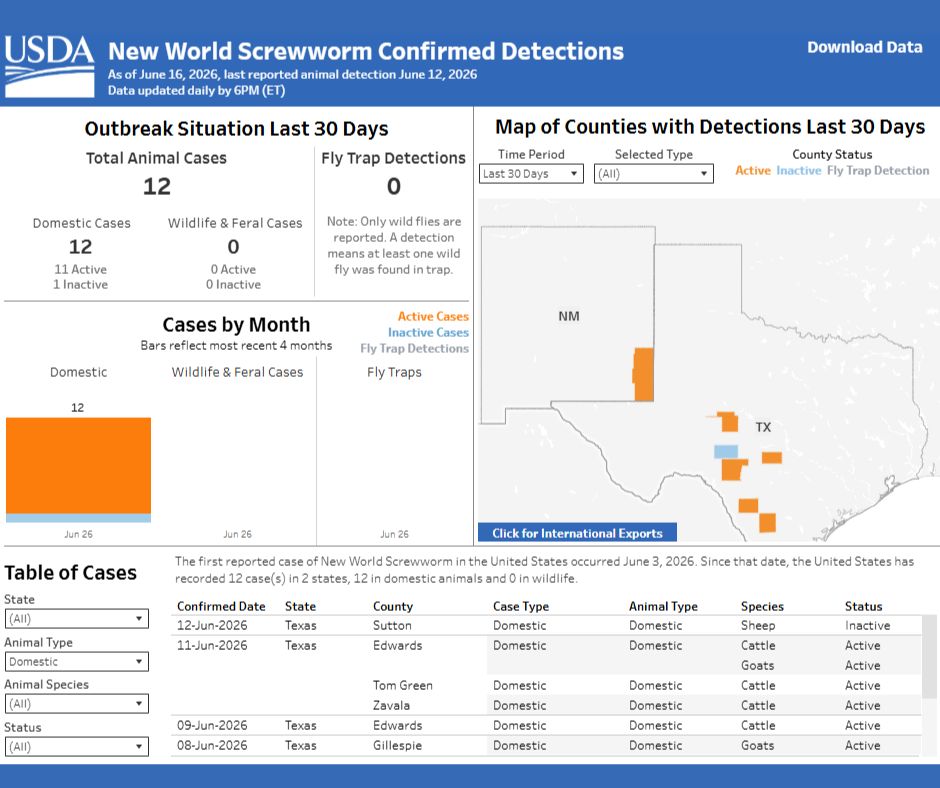
The map answered questions that headlines alone could not. Within seconds, the map provided the context I was looking for. I could see the spatial pattern of detections, their proximity to one another, and where surveillance efforts were concentrated. It transformed New World Screwworm from an abstract news story into something tangible. Are detections accumulating in the same areas, or are they being successfully contained? Are new counties appearing, or are cases remaining localized?
Even outside Texas and surrounding states, New World Screwworm is worth paying attention to. No one knows how far north it may spread, but awareness and early detection are critical. There is no need to live in fear, but there is a need to stay informed.
I had questions that a news story alone could not answer. Clients may have the same questions. Understanding the geographic pattern of detections allows veterinarians to provide context and answer questions with confidence rather than speculation.
Veterinarians working with livestock and equids should remain especially vigilant when examining animals with wounds. Early recognition and client education are critical, particularly for practices serving cattle, sheep, goats, and horses. Ensuring clients know what signs to watch for and when to seek veterinary attention can play an important role in early detection and response.
Companion animal veterinarians also play an important role. While most detections have occurred in livestock, pet owners should understand the importance of proper wound care and monitoring. Practice owners may also want to review reporting protocols and ensure their teams know how to respond if a suspected case is identified.
The dashboard won’t predict the future, but it does provide something equally valuable: situational awareness. For veterinarians and practice owners, that awareness can turn an emerging threat from something abstract into something actionable.
Written by Charlotte McKay