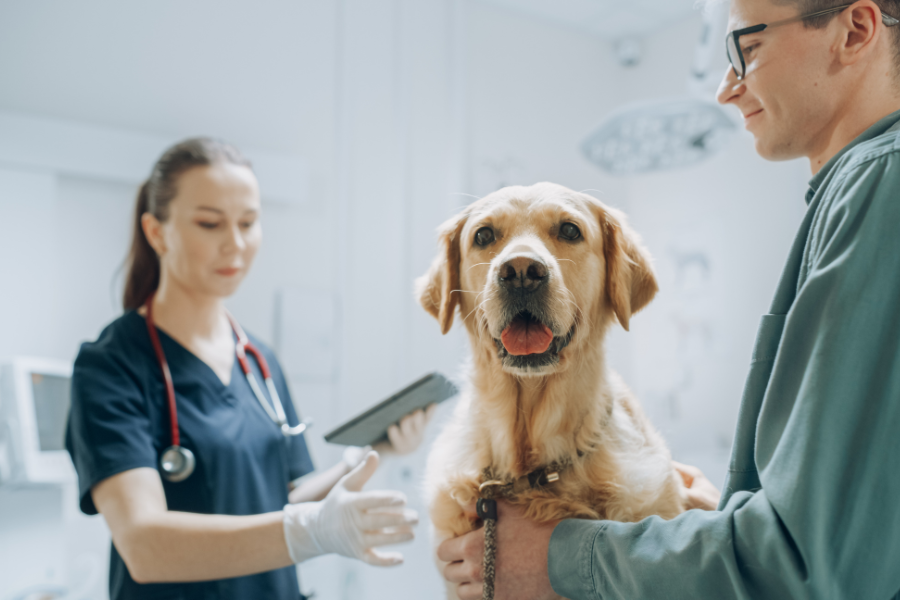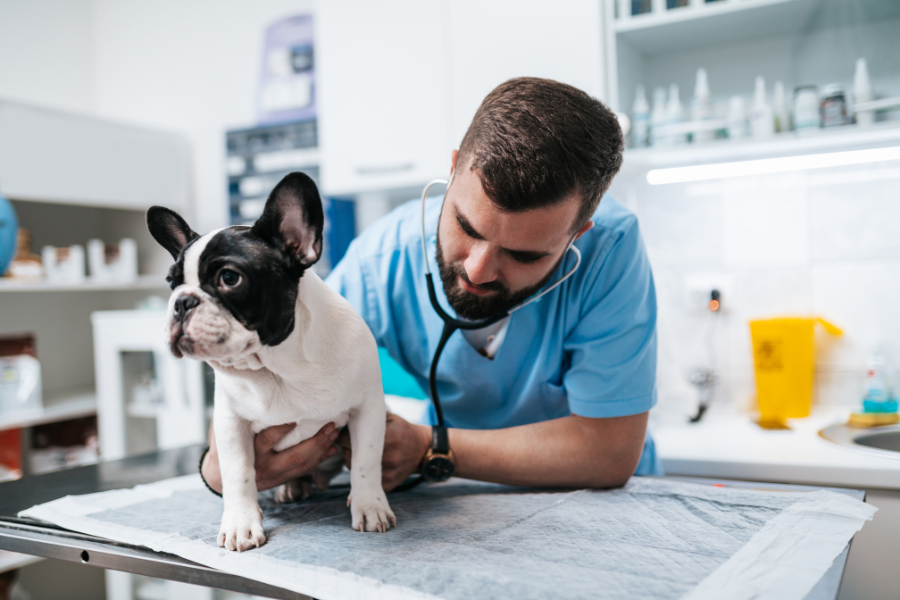



Dr. Antonio Pedraza believes that excellent veterinary care combines strong clinical skills with effective client communication. He prioritizes understanding the needs of both his patients and their owners, creating a supportive environment and open dialogue to ensure the best long-term outcomes.
Recently, those priorities were put to the test when a patient came in with a rapidly growing mass. Dr. Pedraza and his team at Sevilla Veterinary Hospital in Santa Monica/Los Angeles knew the pet owners would be anxious about the results. In years past, getting those test results back from a reference lab could take days, and the time needed to schedule a surgery or refer out to a specialist could take even longer. But thanks to the artificial intelligence capabilities, Dr. Pedraza was able to perform a fine needle aspiration and get preliminary, accurate results in-house quickly enough to proceed with same-day surgery.
“Knowing what we were dealing with beforehand allowed us to plan a more targeted and efficient procedure,” Dr. Pedraza said.
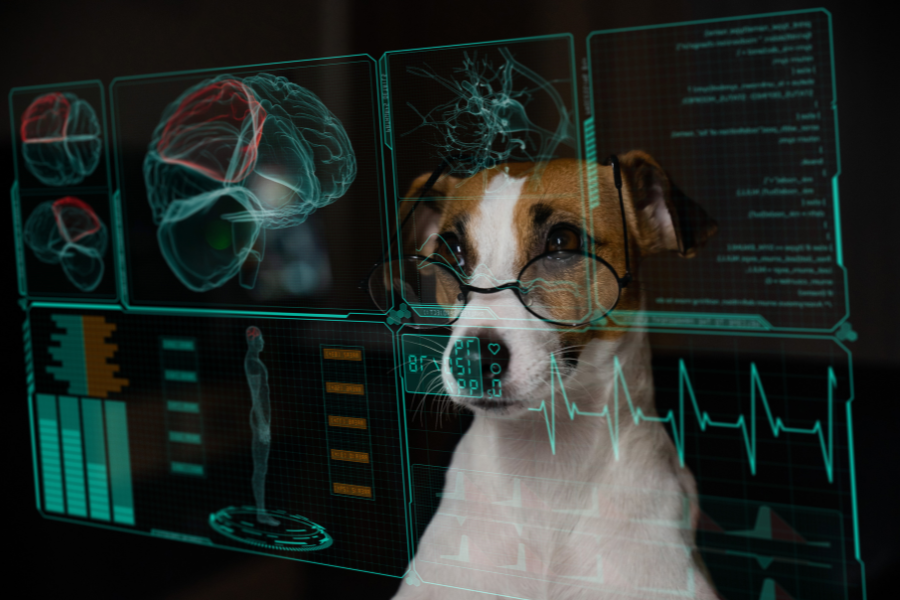
Indeed, AI technology is poised to revolutionize practice management and pet care. Innovative AI tools can automate tasks, improve diagnostics, optimize workflow, reduce workload, and enhance client communication.
This technology isn’t new to the veterinary diagnostic space. One of the first applications was with analyzers to interpret urine sediment. This was traditional machine learning, very limited in its ability and limited in improving upon itself. “It had a place, and it was extremely well accepted in practices to aid in getting results quicker,” said Paul H. Jaffe, DVM, Medical Lead, Corporate and Specialty- Diagnostics, Zoetis.
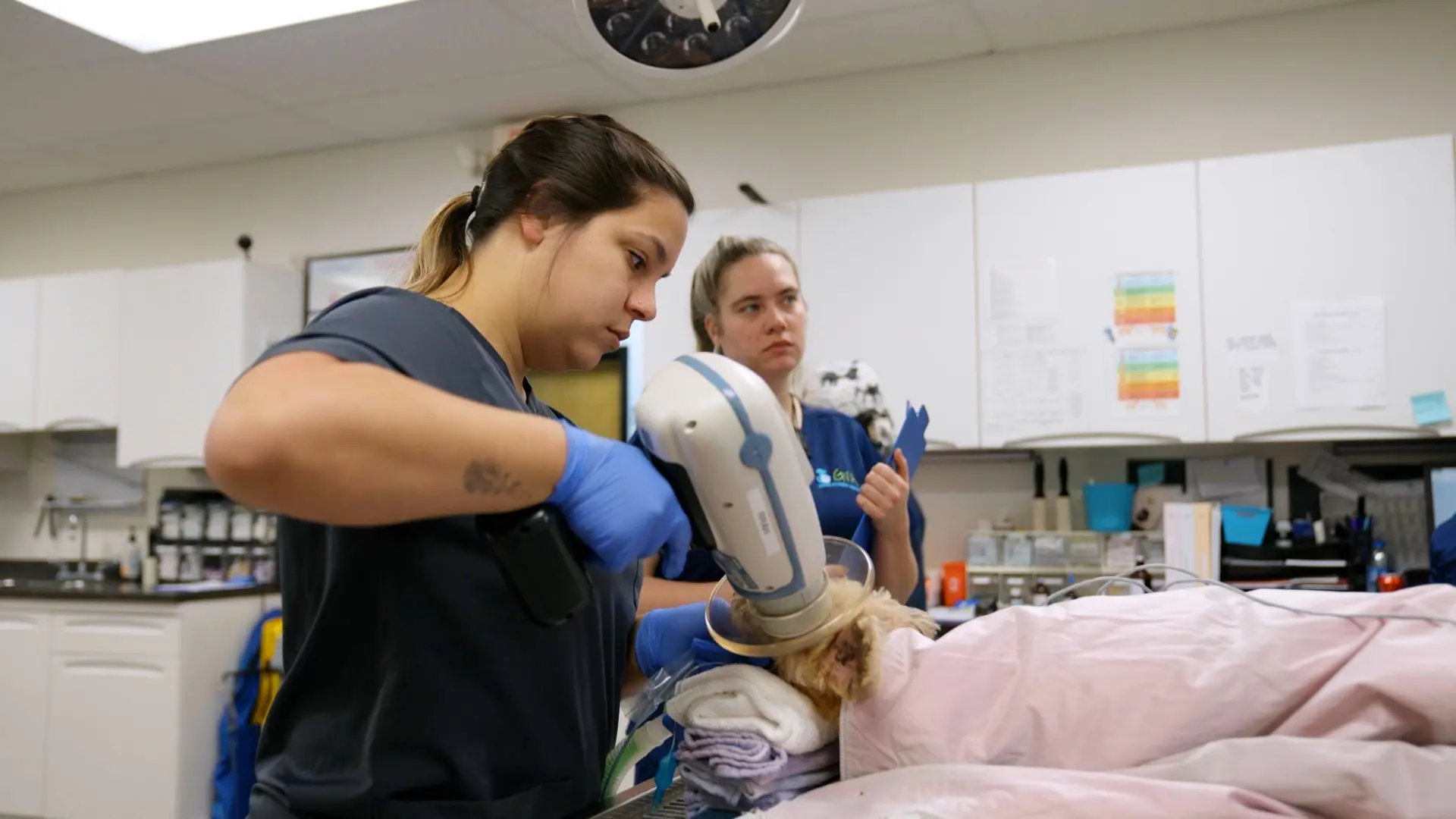
Today, AI technology is increasingly being integrated into the everyday work of a veterinary practice. It can analyze a radiograph, ultrasound or MRI with greater speed and accuracy. AI can assist with voice-to-text medical record keeping. It’s also helping veterinary practices with automating appointment scheduling, telemedicine, and inventory management.
Diagnostics may be where the veterinary community sees the greatest benefits in the coming years. Work involving a microscope takes a significant level of training and skill to be proficient. With today’s AI technology, no longer do you need a technician or veterinarian spending hours sitting over a microscope in a practice. “You can actually have your technicians doing things that better utilize their time and skill set,” Dr. Jaffe said. “They can start the diagnostic testing and move on to the next task and know that the test will get run, and the results automatically will get integrated into the patient’s medical record. So, it improves efficiency and optimizes workflow.”
Better understanding, better care
Modern diagnostic analyzers utilitzing AI are transforming veterinary medicine. Current technology includes AI-powered digital scanning systems and hematology analyzers that provide rapid, accurate results.
AI-enabled digital scanning systems can analyze fecal samples, ear and skin cytologies, urine sediment, and blood smears, lymph nodes, and cutaneous and subcutaneous masses. These systems typically provide results in about 10 minutes, and have the ability for an add-on expert review.
These digital scanning platforms can also perform digital cytology using human expertise. “This is human intelligence, not artificial intelligence, so anything that can be put on a microscope slide and scanned goes up in the cloud and then is read by a Board-Certified Clinical pathologist within a matter of hours,” Dr. Jaffe said. “There is no need to ship slides off to a reference lab and wait days or longer to get results.”
Dr. Pedraza chose to use AI powered technology primarily to support his practice’s workflow for in-house sample analysis, especially for same-day surgeries. He often performs fine needle aspirations on masses, and having the ability to get quick cytological insights helps to make more informed decisions. “It allows us to better plan our surgical approach by understanding the nature of the mass beforehand, which ultimately leads to more precise outcomes and improved patient care,” he said. “It is really helpful to be able to get an answer the same day to the client. Clients love to be able to go home with an answer of what it is going on and have treatment options (knowing every single detail of the condition).”
Meanwhile, advanced AI-powered hematology analyzers are designed to provide rapid, reference-lab-quality Complete Blood Count (CBC) results directly at the point of care, enhancing diagnostic efficiency and accuracy. These analyzers utilize expert-trained artificial intelligence algorithms to analyze hundreds of thousands of cells, considering numerous cellular parameters, ensuring precise and reliable results.
Dr. Pedraza brought this AI-powered hematology technology into his practice because he wanted better overall accuracy and the ability to provide more reliable platelet counts, “something our previous analyzer often struggled with,” he said. “In a surgical setting, that kind of detail is critical.”
AI-powered analyzers flag abnormalities that might otherwise go unnoticed, prompting the veterinary team to run a blood smear when necessary. That extra layer of diagnostic insight has been incredibly valuable and something Dr. Pedraza didn’t have with prior equipment. “It is like having a pathologist in house,” he said.
This hematology technology plays a key role in helping Dr. Pedraza and his team confirm that a patient is healthy enough for same-day surgery, which is a major part of their practice model. They receive a high volume of surgical referrals from other clinics, often with the expectation of performing procedures as quickly as possible. Having access to accurate, fast hematology results allows them to confidently move forward with surgery the same day, which is essential for both patient care and the team’s workflow efficiency.
Getting started
Today, the biggest challenge Dr. Jaffe sees with integrating AI into a veterinary practice is simply the behavior change needed amongst users. “Veterinarians have always done all of the work themselves, or have trained a technician to do some of the work, so they may initially struggle to adapt to the new technology.”
Embracing the integration of AI into the veterinary practice means learning to trust the technology to provide accurate results, enabling the veterinarians to use their clinical skills and expertise to take those results, formulate a diagnosis and put a treatment plan together.
“That being said, there are inevitably times where the clinician questions the results from the AI, and that’s OK,” Dr. Jaffe said. Having the ability to have a human specialist review the sample and provide their interpretation is paramount.” Once the sample is scanned, the whole slide image is in the cloud, and with just a couple clicks of the mouse, the veterinarian can request an expert review from a Board Certified Clinical pathologist to take a look and provide their interpretation without the veterinarian having to prepare another slide and ship it off to the reference lab, then wait days for the results.
Initially, the biggest hurdle for Dr. Pedraza and his team in implementing the new AI technology was simply adjusting their routine to include this system and learning to interpret its AI-powered outputs alongside their clinical expertise. “Like with any new technology, there was a learning curve in figuring out how to seamlessly incorporate it into our daily processes without interrupting our existing workflow,” he said. “However, as the team became more familiar with it, the benefits became clear.”
The future of veterinary medicine
For Dr. Pedraza, the combination of strong clinical skills, clear communication with pet owners, and now the AI capabilities have enhanced the level of care he can provide patients. “While we’re still cautious about fully relying on AI, [these] tools have definitely enhanced our diagnostic capabilities and helped us elevate the level of care we provide,’ he said.
AI has been around for a while across industries, Dr. Jaffe said, and it’s only going to get better. “It’s making our lives more efficient and easier, especially from a medical perspective,” he said. It’s reducing the workload of staff members, which, in the long term, will reduce stress and potentially reduce the burnout that’s occurring in the veterinary profession.